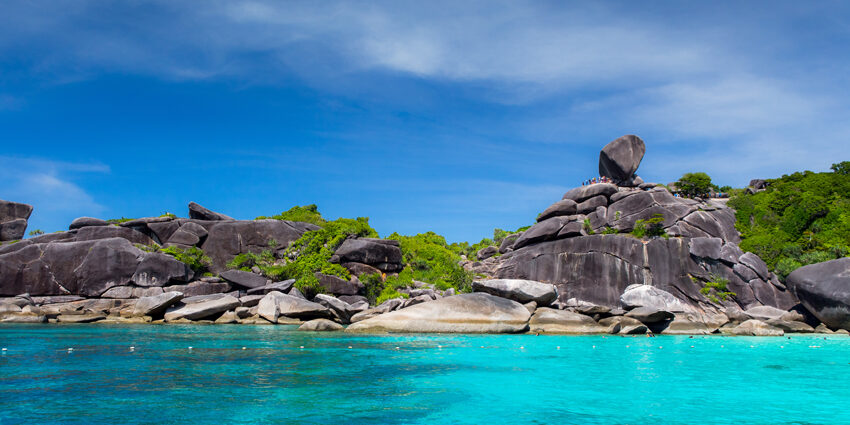
In what seems like an ongoing circular pattern, Similan Islands – a crown jewel amongst Thailand’s natural attractions, will shut down again, intensifying the conversation on environmental preservation and sustainable tourism.
The Similans, a cluster of eleven islands located in the Andaman Sea, have been a major draw for tourists, attracting around 1 million visitors annually. They are part of the Mu Ko Similan National Park, which is known for its diverse and pristine coral reefs, crystal-clear waters, and rich marine life, including endangered species such as the Hawksbill and green turtles.
However, this influx of tourism has sent alarming signals about the effect of human activity on the coral reefs, pushing the Thai authorities to enforce measures that protect and rehabilitate the delicate ecosystems. In 2018, the Similan Islands were closed to divers and visitors for five months, which allowed some recovery time for the damaged coral and marine life populace.
Following this successful closure, it was decided to make it an annual closure, typically running from May to October, coinciding with Thailand’s monsoon season. It was during such annual closure in 2020 that Thailand faced the global COVID-19 pandemic and consequently extended the closure as the world went into lockdown.
Subsequent online reports indicate that the extended closure has significantly benefited the marine environment. Chris Mitchell, marine ecologist and diving instructor, revealed in a blog post that the first dive trip post-lockdown witnessed an increase in the number of reef sharks, a species rarely seen due to tourism-related disturbances.
The Thai government has been wrestling with the delicate balance between opening the country’s economy to tourism revenue and protecting its cherished natural resources. The kingdom stands as one of Asia’s biggest tourism hubs. In 2019, according to the World Bank, the sector accounted for 21.4% of the country’s GDP. However, the pandemic gave Thailand no choice but to shut the doors, leading to an unexpected breather for its natural resources and resulting in fauna returning to areas from where they had retreated due to human activity.
This year, the Similan Islands are set to close again between May 15 and October 15, a strategy aligned with the islands’ recurrent rejuvenation process. These closures are conducted to mitigate the harmful effects of human activity, particularly diving and snorkelling, on the underwater environment.
During these closures, the Department of National Parks, Wildlife and Plant Conservation (DNP) works extensively on coral restoration efforts and closely monitors the impact of closures on marine life.
The prolonged closure offers researchers a unique opportunity to study how marine ecosystems respond and recover without human interference, providing valuable insight that will inform future efforts for sustainable tourism globally.
While local businesses express their concerns over the losses from the tourism hiatus, it’s important to note that a balance has to be struck between economic gain and environmental preservation. The situation raises key questions around responsible tourism, forcing a reconsideration of visitor numbers, the introduction of eco-taxes, and other methods to regulate tourism sustainably.
Meanwhile, tourists and marine enthusiasts eagerly wait for the islands to reopen and hopefully find them restored to their unspoilt beauty, presenting a potentially sustainable model that could be replicated in other sensitive ecosystems worldwide.
In conclusion, the repeated shutdown of the Similan Islands indicates the larger global conversation about the potential trade-offs between economic growth and environmental conservation. As worldwide travel and tourism are reshaping post-pandemic, taking responsible steps towards sustainable tourism will be critical to ensure that pristine natural habitats such as the Similan Islands can continue to be marvelled at by future generations.
Original Source: https://reefs.com/similan-islands-will-close-again/