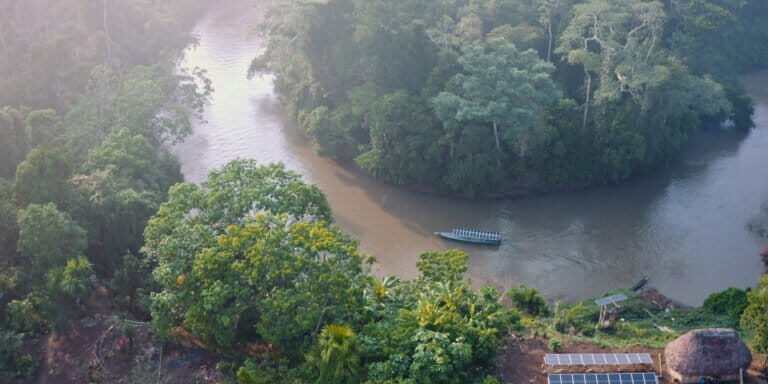
Numerous experts now recognize that empowering indigenous controllers is fundamental for safeguarding the connectivity of the Amazon Basin, where deforestation rates have severely escalated in recent years. This recognition signifies a significant shift to prioritize indigenous people’s role in maintaining global biodiversity hotspots.
Researchers and ecologists point out that traditional indigenous land management techniques are proven to be successful in conserving and regenerating ecosystems. Data from Amazon Environmental Research Institute (IPAM), Brazil, highlights that indigenous territories account for about 13% of the Amazon Basin and hold 28% of its carbon stocks. Yet, they have seen less than 3% of total deforestation. This correlation between indigenous governance and decreased deforestation rate indicates that collaboration with these communities is crucial to maintain the Amazon Basin’s resilience.
The Amazon Basin, an ecological miracle known for its wealth of diverse species and large carbon sinks, is under severe threat due to deforestation. Current activities in the region, including logging, farming, mining, and livestock farming, have collectively contributed to the rapid alteration of its pristine landscapes. The cascading effects of these human actions have immensely impacted the Basin’s ecology and the global climate system.
Residing in this region for centuries, indigenous communities possess detailed knowledge of the Amazon’s ecosystems and traditional practices to curb deforestation effectively. “Indigenous communities know their territories better than anyone else and have a vested interest in sustaining the resources they depend on,” emphasized Professor Sofia Ribeiro, an expert on forest conservation at the Federal University of Amazonas.
Tuntiak Katan, an Ecuadorian indigenous leader and general coordinator of the Global Alliance of Territorial Communities, echoed these sentiments. “Our ancestral knowledge has allowed us to conserve and live sustainably in these forests for countless generations. Strengthening indigenous governance is unequivocally key to protecting this crucial ecosystem,” he advocates.
However, securing indigenous rights is a contentious issue in many South American countries. Government policies often overlook their pivotal role in conservation, leading to alienation and exploitation. Venezuela and Brazil have witnessed violent territorial disputes where indigenous communities are often victims of brutal clashes with illegal miners and loggers backed by political interests.
Despite the difficulties, environmental agencies and NGOs worldwide have initiated numerous campaigns to strengthen the rights of indigenous inhabitants. One notable example is the Amazon Environmental Research Institute’s Amazon Indigenous Rights project. Its initiatives involve helping indigenous communities demarcate and legally establish their land rights. It also strives to equip them with technology and tools to monitor their territories against potential threats.
Contributions from international establishments are equally important. Recognizing this, the United Nations, under its Sustainable Development Goals (SDGs), has committed to boost measures against deforestation, with a specific goal set for conserving forest and terrestrial ecosystems. SDG 15.2 firmly advocates halting deforestation and restoring degraded forests by 2020.
However, the COVID-19 pandemic has further deepened the crisis for indigenous communities, exacerbating economic disparities and further isolating them. On top of that, destruction activities have seen an uptick amidst the global health crisis, as illegal loggers took advantage of reduced law enforcement. This underscores the urgency to protect the forest and back up indigenous communities in their daily fight against deforestation.
Environmental groups, researchers, and indigenous leaders insist on more robust international action to limit deforestation by primarily empowering local custodians of the forest. A comprehensive approach that respects their rights, recognizes their management role, and empowers them with tools to protect their lands is critical for curbing the disintegration of Amazon’s ecosystems and our planet’s health. As Ribeiro stated, “the key to protecting the world’s lungs lies with the people who have cared for it for generations. We need to listen to their voices, now more than ever.”
Original Source: https://news.mongabay.com/2026/04/indigenous-governance-key-to-protecting-amazon-basin-connectivity-experts-say/