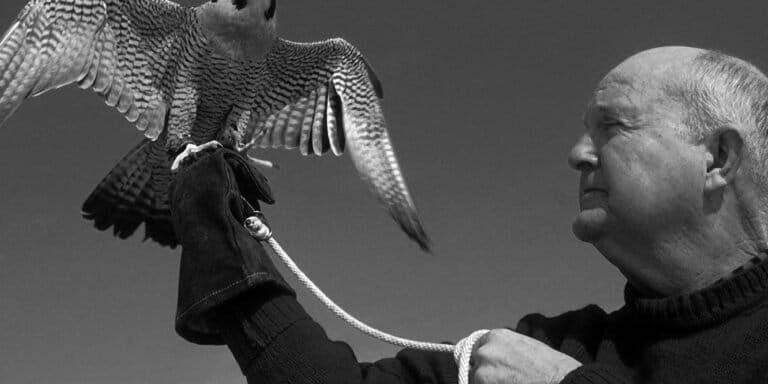
You may have seen his name in association with birds – particularly bald eagles. Dr. Mitchell Byrd, a revered ornithologist, has dedicated his life to understanding and preserving these majestic creatures. He was pivotal in the recovery of the bald eagle population in the Chesapeake Bay area, a feat that has catapulted him to national recognition.
Byrd, a retired biology professor and research associate for the Center of Conservation Biology (CCB) at William & Mary, played an instrumental role when these regal raptors were on the brink of regional extinction. His relentless efforts, combined with the forbidding of the pesticide DDT in 1972 and the passage of the Endangered Species Act in 1973, have resulted in the triumphant return of the bald eagle, symbol of American national pride and strength.
It was late 1950s when Byrd first noted that an alarming decline had struck the Chesapeake Bay eagle population. A pesticide, DDT, was found to be causing eagles to lay eggs with thin shells, leading to decreased hatchling survival rates. During this period, the nesting population of bald eagles in the Chesapeake region plummeted to a shocking 20 pairs.
With the ban on DDT and his diligent regional surveys, Byrd started to gradually document an increase in the eagle population in the late 1970s. However, the eagles were not entirely off the hook just yet.
According to Bryan Watts, director of the CCB, the return of the bald eagles in the Chesapeake Bay area has been a “40-year recovery.” Watts further added, “Mitchell Byrd has been integral to this battle for the eagles’ survival. His tireless efforts through his long career have resulted in tremendous success – a population increase from the point that we almost lost them, to where they are today.”
To measure success in such endeavors means capturing hard data. Byrd, along with his team of volunteers and the Virginia Department of Wildlife Resources, has closely followed the growth of Chesapeake’s eagle population. His ongoing research includes tracking the number of nesting pairs, mapping their territories, and monitoring the health and habitat conditions of these birds. The latest 2020 tally shows a remarkable comeback story, with over 2,100 active bald eagle nests identified around the Chesapeake Bay.
Mitchell Byrd, now 94, gave up climbing trees and tagging eaglets after he broke his leg at the age of 77 while monitoring an eagle’s nest. Despite his age, he has refused to hang up his binoculars completely. Instead, he has continued to aid and inspire individuals to carry forward his life’s work.
Rebecca Wilson, who volunteers with Byrd on the Bald Eagle Survey, described her mentor as focused to the point of obsession, and tireless in his quiet pursuit to perfect the science of saving the bald eagle.
In January 2021, Byrd was honored with the inaugural Virginia Master Naturalist Program’s Lifetime Achievement Award in recognition of his life’s work. He was also recently featured in the documentary film, “Mitchell Byrd: Eye in the Sky,” made available on the CCB website to illuminate the work of this conservation champion.
In spite of all the accolades and attention, Byrd maintains a humble focus. His eyes remain directed skyward, toward the soaring birds he worked tirelessly to save, underscoring the importance of their continued preservation. His journey symbolizes a palpable commitment to the preservation of nature, teaching us the importance of conscientious cohabitation with all species.
Byrd’s story serves as an inspiring reminder that a single focused vision, when steadfastly pursued, can indeed change the world, one bird at a time.
Original Source: https://news.mongabay.com/2026/04/mitchell-byrd-ornithologist-who-helped-bring-bald-eagles-back-from-the-brink-in-the-chesapeake-area/