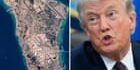
The 45th President of the United States, Donald Trump has frequently voiced his willingness to go to unusual lengths to secure oil interests for America, prompting critics to claim that his foreign policy is being driven by ‘fossil-fuel imperialism’. This term, increasingly prevalent in recent online media coverage, reflects concerns over Trump’s apparent indulgence in regime manipulations to control oil production in the Middle East, mainly Iran.
Under the Trump administration, the US’s stance on fossil fuels experienced substantial changes with reinforced prioritization on bolstering the country’s global standing in oil production. It was virtually impossible to ignore Trump’s consistent criticism of countries like Iran, marked by strong rhetoric and heightened sanctions.
Inarguably, Iran holds critical relevance in global oil politics. Home to the world’s fourth-largest oil reserves, it plays a significant role in the Organization of Petroleum Exporting Countries (OPEC). However, American oil politics under Trump had Iran firmly in its crosshairs. A relentless pursuit culminated in a ‘maximum pressure’ policy undertaken to diminish Iran’s oil exports, leading to widespread condemnation.
Presenting a backdrop to such policies, the US has become world’s largest oil producer, significantly reducing its dependence on foreign oil. This development came after hydraulic fracturing, or ‘fracking’, amplified the country’s oil production. Trump, aiming to maintain US energy dominance, deliberately targeted countries that could compete in global energy production.
Simultaneously, relationships with allies like Saudi Arabia were strengthened to offset decreased Iranian oil supply and maintain control over global oil prices. Despite an avowed commitment to American energy independence, Trump’s constant fixation on Middle Eastern oil made it difficult to ignore allegations of ‘fossil-fuel imperialism.’
Policy analysts frequently related Trump’s attitude towards Iranian oil to his criticism of the Joint Comprehensive Plan of Action (JCPOA) or the Iran nuclear deal. By withdrawing from JCPOA, Trump ramped up economic pressure on Tehran, intending to cripple its oil industry.
Robert Vitalis, a political scientist, coined the term ‘oilcraft’ in this context to define a false belief system portraying foreign oil control as essential for national security. Rather than a fight for democracy and human rights, critics argue that his administration’s aggression towards Iran was ideologically rooted in this oilcraft.
The natural resource obsession isn’t exceptional to Donald Trump’s administration, yet unusually overt in his case. Throughout his presidency, Trump constantly referred to Iraq’s oil fields, publicly mulling over “keeping” them following U.S military engagement in the middle east.
Dan De Luce, a writer for NBC News specified that Trump’s foreign policy often revolved more around oil politics than traditional diplomatic or strategic concerns. Shifting the focus from democracy to resources represented a concerning departure from conventional foreign policy parameters.
Undoubtedly, the suggested ‘fossil-fuel imperialism’ painted a vivid picture of the Trump era’s oil politics. It is up to the Biden administration to reshape the narrative and potentially realign the US’s stance on international oil politics within a context of climate change concerns.
Yet, President Biden faces a contentious path. As the administration takes steps to rejoin JCPOA and balance relationships with Middle Eastern allies, the task ahead is intricate. Amid pressing global environmental concerns, Biden’s energy diplomacy needs to balance climate action’s moral imperative and economic demands.
In a nutshell, Trump’s accused ‘fossil-fuel imperialism’ reflects a significant chapter in American oil politics, providing a perspective for understanding the dynamics of international relations and domestic economic strategies. The implication of such policies on future US relations with oil-rich nations and the world’s perception of the US as an energy superpower remains to be seen.
Original Source: https://www.theguardian.com/us-news/2026/apr/01/trump-iran-oil-fossil-fuel-imperialism