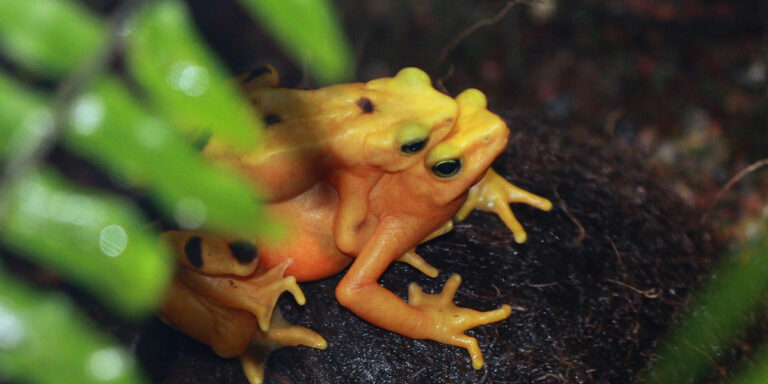
In an unprecedented move hailed by conservationists worldwide, a group of captive-bred Panamanian golden frogs has been released into their natural habitat. The initiative, conducted by a coalition of international zoological institutes, marks a significant moment in the decades-long effort to prevent the extinction of this delicate and iconic species.
Once abundant across Panama’s central mountain range, Atelopus zeteki – the scientific name for the Panamanian golden frog – saw its numbers plummet due to habitat loss, climate change, and a lethal fungus, chytridiomycosis, which has devastated frog populations worldwide. This frog, which is not only a critical part of the country’s ecosystem but also a national cultural symbol, was last seen in the wild in 2007.
The reintroduction program is the fruit of decades of intricate and painstaking conservation work by international experts. It began with the extraction of a small population of frogs to form a captive-breeding “insurance population” just before the chytrid fungus swept their range. In the years since, leading zoological institutions, including Maryland Zoo, San Diego Zoo, and Panama’s very own Punta Culebra Nature Center, have cared for and bred these frogs.
“The release of these captive-bred frogs is a big step towards the long-term survival of the species,” said Doug Vargas, Director of Conservation Programs at Panama’s Amphibian Rescue and Conservation Project. “These frogs are important for the ecosystem as they eat insects affecting crops and because they are also a key source of food for other wildlife.”
Releasing captive-bred amphibians into the wild is no insignificant feat. These frogs needed to undergo rigorous health examinations, while case-by-case assessments ensure their release sites are secure, predator-free, and, crucially, free from the deadly chytrid fungus.
Another vital component of this ground-breaking initiative is the user-friendly app, Frog Spotter. Developed by scientists from the Smithsonian Institution, this app enlists public help in monitoring the released frogs. By tracking the whereabouts and behavior of the frogs, users provide invaluable data that will ultimately contribute to their long-term survival.
Critically, the plight of the Panamanian golden frog is merely one chapter in the worldwide crisis of amphibian extinction. According to the International Union for Conservation of Nature, around 40% of the world’s amphibian species are threatened, making them the most endangered group of animals on the planet.
Ecologist Rick Hutchins from the Global Wildlife Conservation articulates the trans-global relevance of this issue: “The decline in amphibian populations is a clear warning sign of the health of our planet. The situation with the Panamanian golden frog serves as a vital call to action to address biodiversity loss and the wider implications of climate change.”
As the first-ever release of captive-bred Panamanian golden frogs into the wild, this initiative represents a significant advance in global conservation efforts. Still, experts are keen to emphasize that this initial release, while historic and promising, represents just the start of an ongoing mission to ensure the survival of this emblematic species.
“Overall, the fate of the Panamanian golden frog is still uncertain,” Doug Vargas admitted. “But through rigorous science, international collaboration, cutting-edge technology, and public involvement, we have a fighting chance of saving this unique species. After all, we owe it not only to the frogs but to future generations”.
Driven by an enduring spirit of cooperation and innovation, this landmark initiative underscores the importance of collective action in addressing the mounting threats to global biodiversity. As eyes the world over watch the progress of these little golden emissions of hope, the Panamanian golden frog continues to be far more than a national symbol; they are an emblem of international conservation unity.
Original Source: https://news.mongabay.com/short-article/2026/03/captive-bred-panamanian-golden-frogs-released-to-the-wild/