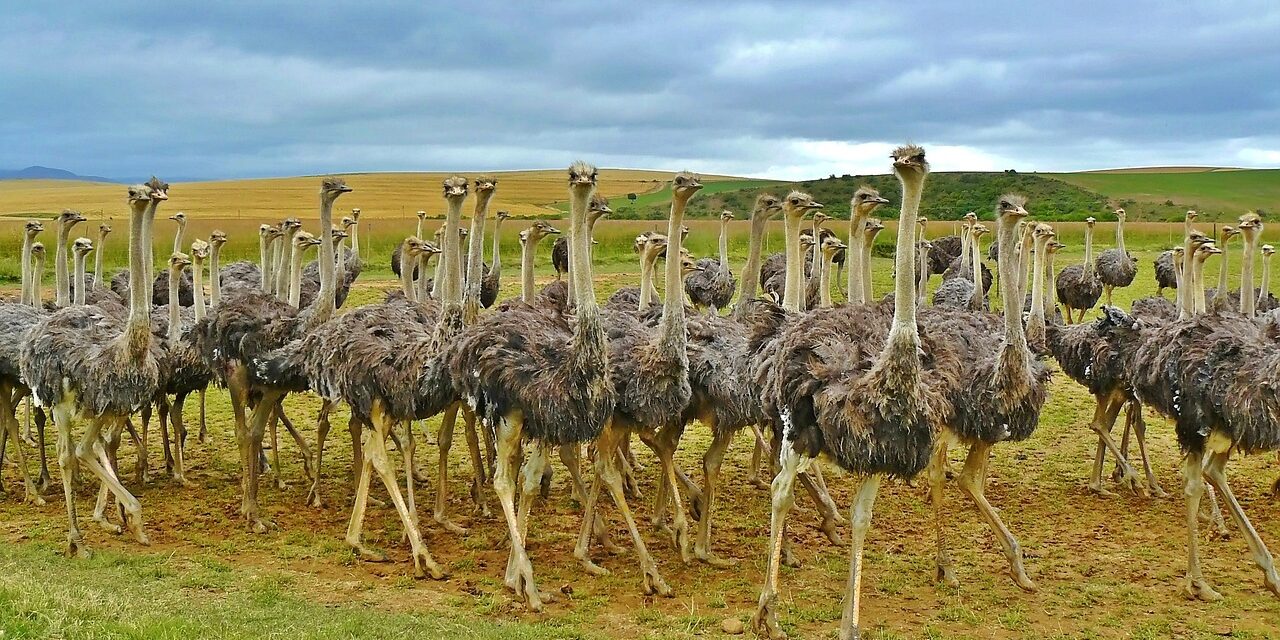
A recently discovered crocodile relative from the Triassic period has baffled paleontologists with its unusual appearance, drawing comparisons to an ostrich-like dinosaur. This intriguing creature, unearthed in what is now Argentina, showcases a striking blend of features that challenge existing understandings of prehistoric reptile morphology.
Key details
The new species, named Meridania anceps, exhibits long legs and a slender body, much like modern-day birds, particularly ostriches. Its distinctive adaptations suggest it may have been a fast runner, capable of traversing its environment with agility. This discovery is notable not only for its anatomical features but also for the insights it provides into the evolutionary trajectory of archosaurs, the group that includes dinosaurs, crocodiles, and birds.
Fossil evidence shows that Meridania lived approximately 240 million years ago during the middle Triassic epoch. The creature’s fossils, characterized by elongated limbs and a unique skull structure, have challenged previous notions about the body plans of early crocodile relatives. Unlike typical crocodyliforms with more stocky builds, this species exhibited adaptations that indicate a different lifestyle, potentially involving open habitats.
Why this matters
The discovery of Meridania has significant implications for our understanding of the evolutionary landscape during the Triassic period. It suggests that the diversification of body plans among archosaurs was more complex than previously believed. Researchers are now considering the evolutionary pressures that could have led to such diverse adaptations, including competition for resources and changing environmental conditions.
Moreover, the physical characteristics of Meridania imply that locomotion strategies among ancient reptiles were more variable than what researchers have typically envisaged. This evolutionary shift towards more agile forms may suggest an early experiment in the development of traits seen later in dinosaurs and birds. These findings could assist in piecing together the puzzle of how certain features, such as bipedalism, arose in the lineage that would ultimately give rise to birds.
Broader picture
The implications of this discovery extend beyond just Meridania anceps. It invites a reevaluation of how we categorize prehistoric reptiles and their adaptive strategies. Traditionally, paleontologists have viewed crocodiles and their relatives as primarily aquatic creatures. However, the existence of a fast-running, land-adapted crocodyliform like this signals a likely transitional phase in their evolutionary history, potentially filling a niche that resembled that of early dinosaurs.
As excavations continue and more fossils are unearthed, the evolutionary story of these intriguing creatures will likely become even more intricate. Understanding the relationships and adaptations of various species within this time period will contribute significantly to the broader narrative of life on Earth, underscoring the complex interplay between environment, adaptation, and evolutionary change.
In essence, Meridania not only stands as a singular marvel of evolutionary history but also as a reminder of the intricate tapestry of life that has shaped our planet over millions of years.
Original Source: https://www.sciencedaily.com/releases/2026/05/260529043641.htm