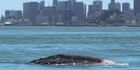
Recent reports indicate a concerning trend: gray whales, once a rare sight in San Francisco Bay, are now dying at alarming rates. Marine biologists have noted an uptick in strandings and mortality, raising urgent questions about the health of the area’s marine ecosystem.
Key details
Historically, gray whales have been spotted in San Francisco Bay during their migratory travels, primarily as they journey between breeding grounds in Mexico and feeding areas in the Arctic. However, in recent months, the frequency of strandings has spiked. Data from the Marine Mammal Center shows that this year alone, several gray whales have been found dead in the bay, with causes ranging from malnutrition to ship strikes.
Experts report that the health of these whales is deteriorating, with many showing signs of starvation. The usual migratory patterns of gray whales have shifted in response to changing ocean temperatures and prey availability. Rather than a temporary spike, many researchers fear this could be part of a longer-term trend linked to broader ecological changes.
Why this matters
The increase in gray whale deaths serves as an indicator of broader environmental issues affecting San Francisco Bay and the Pacific Ocean. The bay, a vital habitat for various marine species, is facing challenges such as pollution, habitat loss, and climate change. As top ocean predators, gray whales are a crucial part of the marine ecosystem, and their declining numbers may reflect rising stress levels across the food web.
Moreover, these deaths pose challenges for conservation efforts. The National Oceanic and Atmospheric Administration (NOAA) has been monitoring whale populations and their health closely due to their status as a protected species. The unexpected rise in mortality rates complicates recovery efforts and demands immediate attention to understand the underlying causes.
Broader picture
This phenomenon is not confined to gray whales; other marine species are also facing increased threats from human activity and climate change. Climate models predict that shifts in temperature will continue to impact ocean currents, which in turn affects marine biodiversity and the distribution of prey species. This cascading effect highlights the interconnectedness of marine ecosystems and the importance of addressing climate-related impacts.
Furthermore, as coastal communities witness these phenomena, the economic implications may also come into play. Gray whales attract ecotourism, and local businesses that rely on whale watching could suffer if these whales become less common. The health of the local environment not only resonates through ecological chains but also through the socioeconomic fabric of communities surrounding San Francisco Bay.
In conclusion, the alarming rates of gray whale deaths in San Francisco Bay may signify a troubling trend in marine health, necessitating urgent investigation and action. Understanding the factors contributing to this decline is crucial in efforts to protect these majestic creatures and maintain the integrity of the ecosystem they inhabit. As scientists work to unravel these emerging complexities, the future of gray whales—and the broader marine environment—hangs in the balance.
Original Source: https://www.theguardian.com/us-news/2026/apr/15/gray-whales-san-francisco-bay