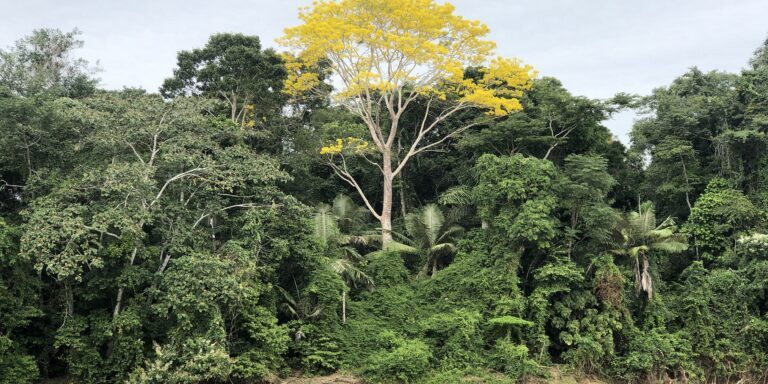
A recent study has uncovered that up to 36% of the Amazon rainforest demonstrates unexpected resilience to climate change, a finding that challenges previous notions about its vulnerability. This research, conducted by a team of international scientists, highlights areas within this critical ecosystem that can withstand environmental pressures better than anticipated. The implications of this discovery are significant, as it provides hope for the future of one of the world’s most vital natural resources.
Key details
The researchers employed advanced remote sensing technologies and ground-based observations to assess the health of over 2 million hectares of forest across the Amazon basin. This comprehensive analysis measured various factors, including tree growth rates, biomass stability, and the overall biodiversity of these regions. Their findings indicate that certain sections of the forest are not only surviving but also adapting to changing climatic conditions.
Interestingly, the study found that these resilient areas frequently coincided with regions exhibiting high levels of biodiversity and complex ecological interactions. These interconnected systems seem to play a crucial role in enhancing the ecosystem’s capacity to cope with stressors such as droughts and elevated temperatures. This contrasts with other parts of the forest, which have shown marked decline in health and increased vulnerability.
Why this matters
The implications of this research are manifold. Firstly, understanding where resilience exists can guide conservation efforts, allowing policymakers and environmentalists to focus their resources on the most vulnerable areas of the forest. This knowledge could bolster preservation strategies and improve the likelihood of sustaining critical biodiversity in the Amazon.
Moreover, the findings contribute to broader discussions on climate adaptation. Identifying resilient ecosystems provides a template for ecological restoration initiatives globally, highlighting the importance of biodiversity in bolstering the resilience of natural environments. This approach offers a hopeful alternative to the often bleak narrative surrounding climate change, suggesting that some ecosystems can thrive even in the face of significant environmental upheaval.
Broader picture
While this research brings encouraging news, it does not alter the pressing reality of the Amazon rainforest facing unprecedented threats from deforestation, agricultural expansion, and climate change. The existence of resilient areas does not negate the urgency of addressing the factors driving ecosystem degradation. The persistence of these resilient regions must be recognized within the larger context of ongoing environmental destruction.
As the global community grapples with the impacts of climate change, maintaining the integrity of the Amazon remains critical—not only for the environment but also for indigenous communities and the global climate system. This study’s findings may serve as a reminder that with the right strategies and concerted efforts, conservation is possible, even in the world’s most threatened ecosystems.
Ultimately, the discovery of resilience within the Amazon underscores the complexity of ecological responses to climate change. It reinforces the need for continued research and a multifaceted approach to conservation that values both preserving existing biodiversity and understanding the dynamics of ecological resilience.
Original Source: https://news.mongabay.com/2026/04/novel-research-finds-unexpected-climate-resilience-in-up-to-36-of-amazon-forest/