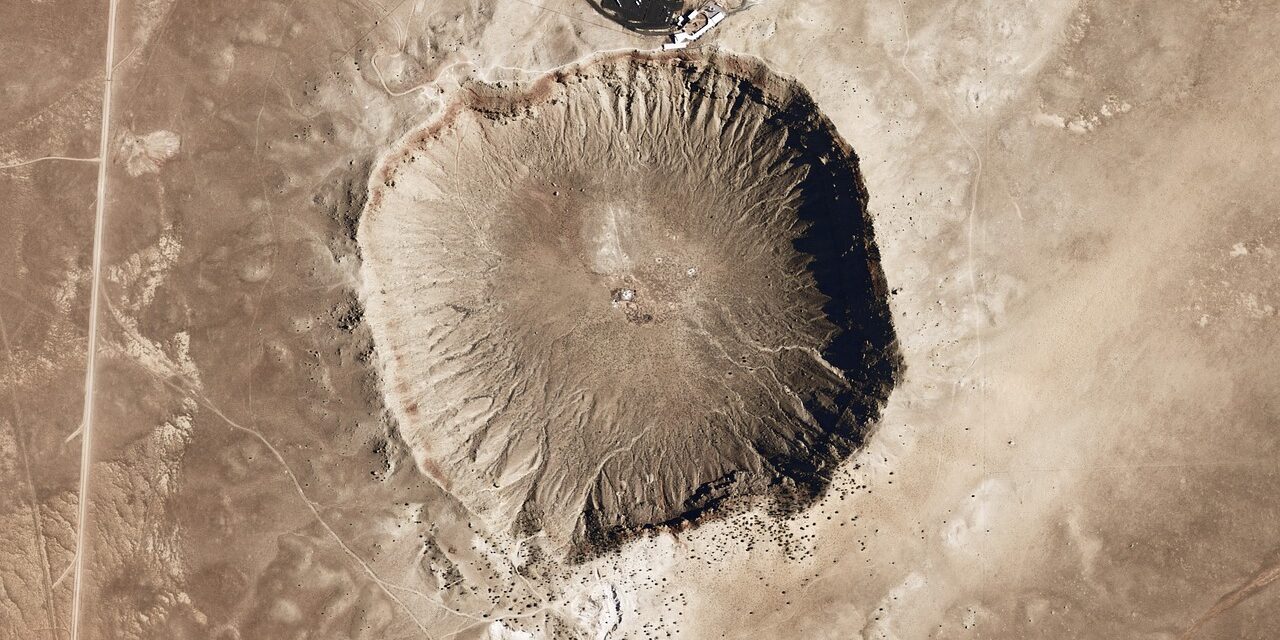
Recent scientific studies suggest that meteorite impacts could have provided the necessary spark for the emergence of life on Earth, bringing with them life-giving molecules and the kind of energy needed to link these molecules together to form the predecessors of proteins and DNA.
This hypothesis, based on detailed scrutiny of meteorites and through experimental work recreating conditions of early Earth, has revived the controversial theory, asserting that life didn’t just originate from Earth but was aided, at least in part, by celestial objects crashing into our planet.
Through the replication of these high-energy impacts in laboratory settings, a team of researchers from Tohoku University in Japan demonstrated that impacts of a certain scale can promote synthetic pathways to form peptide bonds, the links between amino acids that form the basis of protein molecules.
Dr. Yoshihiro Furukawa, the principal researcher, explained, “Meteorite impacts on early Earth’s oceans create enough energy to synthesize basic bio-molecules, a process called impact-induced peptide synthesis.” He added, “These findings bolster the plausibility of meteorite impacts playing a potentially key role in the evolution of life on Earth.”
In addition, several studies have found a fascinating array of organic molecules in meteorites, including nucleobases and sugars, which are the key components of nucleic acids such as DNA and RNA. If such materials already existed in meteorites and comets, and if these celestial bodies rained down on early Earth in significant quantities, then it seems plausible that they would have played an essential role in the origins of life.
This idea resonates with a well-established hypothesis known as panspermia, suggesting that life, or the precursors of life, arrived on Earth via interstellar travels. However, unlike panspermia, this new theory acknowledges the significant role that Earth’s environment plays in the chemical evolution of those biologically relevant molecules delivered by meteorites.
Dr. Ben Pearce, an astrobiologist at McMaster University, highlighted, “This work is an excellent example of the use of experimental simulations to test theories about the origin of life. It provides a novel way to think about how life started – not just with the presence of the right building blocks, but with the right energy input as well.”
Despite the intriguing findings, scientists are cautious while interpreting these results. The challenges in proving this hypothesis stem from the difficulty of determining whether these impacts and the subsequent creation of life-building molecules actually happened in the Earth’s early eons.
James Cleaves, of Tokyo Institute of Technology, added, “The early Earth certainly got pelted by a lot of meteorites, but whether that assisted the origin and early evolution of life or hindered it is an open question.”
Despite these uncertainties, the study undoubtedly provides a significant conceptual leap by explicitly linking meteor impacts to the production of life’s building blocks. As we continue exploring deep time and space, these findings could guide our search for life elsewhere in the universe.
In a context of growing interest in astrobiology and the pursuit of life beyond Earth, these findings bring a critical perspective to our understanding of life’s origins. Irrespective of whether the precise processes proposed in these studies played out in our planet’s infancy, the shift in thinking emphasizes not only where life’s ingredients may have come from but how they might have been stitched together. It’s a shift, in essence, from life’s “hardware” to life’s “software.”
This innovative research presents a fascinating paradox—that the destructive forces of meteor impacts may act as the creative catalyst for life. As we push the boundaries of cosmic understanding, this paradox challenges conventional narratives about life’s origins and sparks a new dialogue about our place in the universe.
Original Source: https://www.sciencedaily.com/releases/2026/04/260403224449.htm