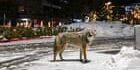
As urban environments continue to expand, humans are not the only species adapting to the concrete jungles. A recent study has discovered an intriguing behavioural change in the native urban coyotes – they are displaying a higher risk tolerance compared with their rural counterparts.
This new study, published in the journal Behavior Ecology, used radio collars to monitor the movements and behaviors of over 800 coyotes from rural, suburban and urban landscapes within the Chicago Metropolitan area over a period of six years. The research is one of the most comprehensive of its kind and reveals new insights into how animals adapt to human-altered environments.
The researchers gauged ‘risk-taking behavior’ by observing how close the coyotes were willing to get to human residences and how often they ventured into roads and highways. The results invariably showcased the adaptation skills of the much-maligned carnivore – urban coyotes were seen to be taking significantly more risks in their daily activity.
The study found that urban coyotes were up to three times more likely than rural coyotes to spend time within 100 meters of human habitation, and were equally more inclined to cross roads or venture into traffic, at the risk of being run over.
Urban coyotes are increasingly making the cityscape their home, exposing themselves to hazardous situations that their rural siblings characteristically avoid. “These results suggest that urban coyotes have either habituated to the high-risk urban environment or they have behaviorally adapted to the built landscape,” said Dr. Stanley Gehrt, one of the lead authors of the study.
Though the researchers acknowledged that individual coyote personalities could play a role in risk-taking behaviors, the prevailing trend still highlighted a unique adaptability trait among urban coyotes that challenged conventional understanding.
“Our data shows a clear distinction in the behavior of urban and rural coyotes, indicating that the urban environment does have a noticeable impact on the risk-taking behaviors of these animals,” stated co-author, Dr. Zhihai He.
This pro-risk tendency also suggests that urban coyotes may have greater access to reliable food sources, and thus higher survival rates, in populated areas despite the dangers posed by traffic or potential human conflict.
The implications of these findings extend beyond the realm of academic interest. Understanding the divergent behaviors and adaptability of urban and rural coyotes has significant consequence for wildlife management. Urban dwellers and civic authorities should have an awareness of these behaviours to mitigate potential conflicts.
The study’s findings further underline the resilience and adaptability of wildlife in the face of rapid urban expansion. The urban coyote behavior might serve as a lesson in adaptation and survival in ever-changing environments, as well as claims back some of the city’s wild roots.
As shared landscapes become an inevitable aspect of urban growth, transparency and understanding between humans and wildlife will ensure a balance in this delicate co-existence. Whether we perceive the bold urban coyote as a nuisance or an inspiring survivor, there’s much to learn from their wily maneuvers in the world of concrete and cars.
Original Source: https://www.theguardian.com/us-news/2026/mar/27/urban-rural-coyote-study