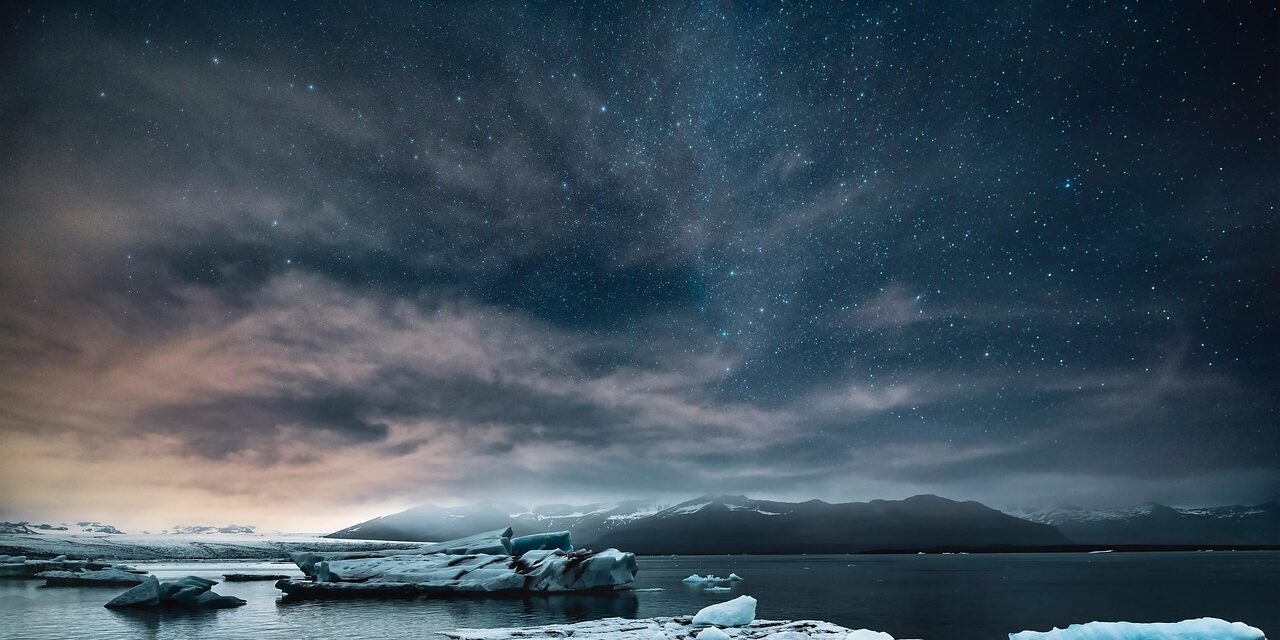
New evidence shows that far from the lifeless expanse one might imagine, the Arctic is teeming with life at molecular levels. Research recently released reveals that Arctic sea-ice ridges, the jagged formations created by colliding ice floes, host an abundance of diverse microbes, challenging the previous understanding of this icy environment.
Scientists from a many countries, including Finland and Russia, embarked on a trip to the Central Arctic Ocean, to observe these unique sea-ice ridges. Using the icebreaker RV Polarstern, the team navigated through the Arctic’s frigid, challenging terrain and collected over 1,000 samples for studying. This comprehensive work is part of the wider study conducted by the Multidisciplinary drifting Observatory for the Study of Arctic Climate (MOSAiC), the largest field study in the region.
The results of this investigation, recently published in the Nature Communications journal, revealed that biomasses discovered on these ice ridges contained rich microbial communities, which include bacteria, algae, viruses, and other minuscule lifeforms. Furthermore, the researchers found that these communities could be up to three times more abundant in ice ridges compared to flat ice.
So, why are these findings significant?
Firstly, a deeper understanding of these thriving microbial communities in the supposedly sterile icy region can help scientists uncover unique life forms and their evolutionary processes. Secondly, the ecological implications of this discovery are also substantial. Due to global warming and the constant loss of Arctic sea ice, any changes to these microbial communities could have far-reaching effects on the rest of the world’s ecosystems.
The melting ice ridges could result in the release of potent greenhouse gases stored by these microbial communities, thus accelerating the warming processes. On a more hopeful side, a deeper knowledge about these microbes might also pave the way for scientific breakthroughs in fields such as biotechnology or various environmental applications.
These findings also shed light on the importance of sea-ice ridges in the Arctic ecosystems. These rough ice features make up about one-third of the total Arctic sea-ice volume. Yet, until now, their role in hosting such diverse life forms had been overlooked. The richness of these microbial communities could also offer a support system for larger organisms, forming a complex ecosystem, and playing a crucial role in the local marine food web.
Understanding what makes the sea-ice ridges a hotspot for microbial life could also provide insights into how life thrives in other extreme conditions around our planet, or potentially, on other planets. One of the defining features of these microbes is their resilience and adaptability that allows them to thrive in harsh and cold environments, similar to those found on Mars or Jupiter’s moons.
The groundbreaking study suggests that an icy landscape is not as barren as it appears but is teeming with invisible life. The findings also emphasize the need for further research to understand the full ecological significance of these microbial communities in the Arctic.
As climate change accelerates, the importance of studying and understanding these icy ecosystems becomes more crucial. Future research should also consider the potentially transformative applications of these microbes in medicine, fuel production, and biotechnology.
It’s evident that the Arctic, once viewed as a desolate and lifeless frontier, is in reality a dynamic and vibrant ecosystem filled with tight-knit microbial communities waiting to be discovered and understood. These latest findings shift our vision of the Arctic as an empty frozen desert to a thriving hotspot of hidden life, giving much more relevance to the cry for its conservation.
Original Source: https://www.nature.com/articles/s43247-026-03364-8