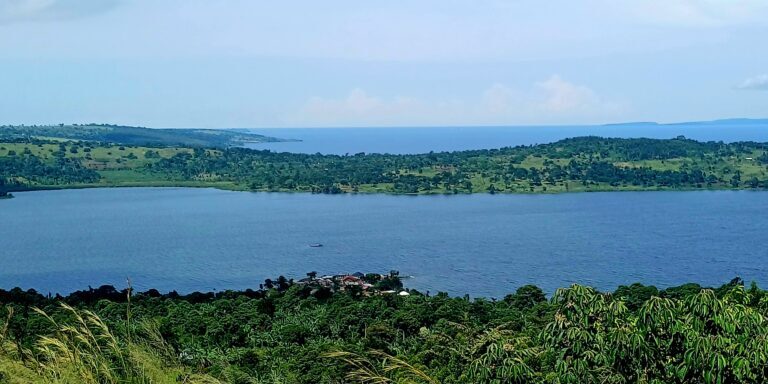
World Water Day comes with a surprising revelation – researchers have discovered novel species in Earth’s freshwater systems even amidst burgeoning threats. This year, as we reflect on the value of water, it’s essential to be aware that the freshwater we rely upon is a home to many unknown, delicate ecosystems, each harboring unique forms of life.
Despite freshwater systems accounting for merely 2.5% of the global water coverage, they host an estimated 10% of all known species, greatly contributing to the planet’s biodiversity. The staggering factor, however, is the mystery attached to these ecosystems as scientists continually find new species in their depths. One such recent discovery is Zospeum tholussum, a tiny snail barely 1mm tall, unearthed from the caves of Croatia. Yet, with exploration comes awareness of their predicament as these habitats face mounting environmental challenges.
This emerging knowledge of freshwater biodiversity and its survival struggles comes from the research networks like BioFresh and MARS, funded by the European Union. These consortiums are dedicated to coordinating global data on freshwater biodiversity, understanding how it responds to various threats, and promoting its sustainability.
Human-induced climate change poses the most significant challenge, altering water temperatures and creating unpredictable flow patterns. Habitat destruction from infrastructural expansion, plastic pollution, overfishing, dams, and invasive species are other serious concerns eroding freshwater biodiversity. The WWF’s 2020 Living Planet Report highlights a shocking 84% decline in freshwater species populations between 1970 and 2016.
Perhaps the most dangerous threat, however, is the lack of public awareness about freshwater biodiversity. According to Steven Loiselle, Senior Research Manager of Earthwatch Europe, public engagement plays a crucial role in conserving freshwater ecosystems. “People are often surprised at the variety of life in their local rivers, and how they can play a role in protecting this,” he says.
There is a pressing need to consider a sustainable water management framework that integrates ecosystem health and biodiversity protection. As part of the EU Water Framework Directive, BioFresh and MARS are exploring the effects of multiple stressors on freshwater health to inform better management practices.
While the focus has traditionally been on the utilitarian aspects of water, such as consumption and agriculture, World Water Day brings a reminder that water also has an immense ecological value that often goes unnoticed.
Fortunately, there are efforts leveraging technology to preserve freshwater diversity. Microsoft’s AI for Earth initiative uses machine learning to help predict freshwater health. In Australia, The National Carp Control Plan utilizes a customized herpes virus to combat the invasive carp species that’s drastically modifying river ecosystems.
However, global participation is imperative, and World Water Day builds a platform to raise this crucial call to action. UNESCO has adopted the theme “Valuing Water” for the 2021 World Water Day, highlighting not only its importance for human survival but also its responsibility in maintaining the planet’s biodiversity.
It’s time that every individual, establishment, and government realize the intrinsic and instrumental value of water, not just as a basic necessity of life and economic activity, but as a life-giver to a host of irreplaceable species, some of which we might not even be aware of yet.
Our relationship with water pivots on ensuring its quality, quantity, and the ecosystems it supports. As more unknown species come to light from the depths of our waters, we must respond with solutions that protect their habitats from vanishing. Because saving our water now means securing our planet’s future.
Highlighting the alarming decline in freshwater ecosystems across the disappearance of species, pollution and climate change will help value water much more than just being life-sustaining. This World Water Day, let’s not forget that every drop counts, not only for us humans but for every species that calls this planet home.
In essence, as we explore the intricate complexities of freshwater ecosystems, we are reminded that our survival is indistinguishably bound with their well-being. The discoveries in Earth’s freshwater species provide us not only with a sense of astonishment but an urgent call to action.
Original Source: https://news.mongabay.com/short-article/2026/03/world-water-day-earths-freshwater-reveals-new-species-faces-mounting-threats/