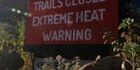
In the sunbaked desert town of Parker, Arizona, a typical March day involves temperatures that most of us would find unbearably hot. Yet this year, the stakes have been raised to record-breaking levels. On March 28, Parker notched a scorching high of 100F (38C), smashing the U.S. record for the hottest temperature ever documented in March.
Situated on the cusp of the Sonoran Desert, along the border with California, Parker is no stranger to extreme warmth. The area’s year-round sunshine and arid conditions make it a commonly recognized hotspot on the national weather map. However, this recent heatwave is something that even seasoned desert dwellers are calling unusual.
Previously, the hottest March temperature on record in the United States was 99F (37C), recorded in 1907 in Rio Grande, Texas. To put it in perspective, Parker’s new record exceeds the average March high by nearly 20 degrees. As the weather station thermometer soared to the triple digits, the news took meteorologists and locals by surprise.
“While we always anticipate high temperatures in Arizona, reaching 100F in March is exceptional,” stated Julie Malingowski, a meteorologist with the National Weather Service. She went onto explain that a potent high-pressure system coupled with dry, downslope winds have created this unprecedented weather event.
The unexpected heat and intense sun can have dramatic effects on human health and the environment. The risk of heatstroke and dehydration increases, particularly for vulnerable populations such as the elderly and those without access to air conditioning. Meanwhile, the parched environment is left susceptible to wildfires, which may become rampant as the summer approaches.
Local response to the heatwave has been mixed. Some residents, accustomed to the Arizona heat, shrugged off the record-breaking temperature. Joshua Garcia, a long-time Parker resident, scoffed at the outrage. “It’s not much hotter than a normal day. We’re used to this.” On the other hand, some felt the disturbance in the climate was cause for worry. Local farmer Dean Rhoades expressed concern over how this might affect his crops, “If it’s this hot now, how bad will summer be?”
The soaring temperatures have also drawn the attention of climate scientists. “This much-above-average event is consistent with the long-term warming trend from human-caused climate change,” said Michael Mann, renowned climatologist and director of the Earth System Science Center at Pennsylvania State University.
Mann emphasized that while individual heat records do not, in themselves, demonstrate a changing climate, the repeated occurrence of such records does point to a broader trend. “We’re setting these records at a much higher rate than we would be in a stationary climate,” he explained.
This record-breaking hot spell in Parker, Arizona offers another stark reminder of the relentless progression of climate change. Not only does it highlight the importance of conducting more research into global warming impacts, but it also underscores the urgency of implementing sustainable practices to mitigate them.
While Parker residents continue to navigate life in such blistering heat, the occurrence serves as a notification to the rest of the nation. A glimpse into a future where extreme heat could become the norm rather than the exception if climate change progresses unchecked.
Despite being a tiny, remote desert town, Parker has now been thrust into the national consciousness. Its record-breaking temperature evidence that the relentless march of climate change isn’t just a looming threat – it’s already here, and it’s heating up.
Original Source: https://www.theguardian.com/us-news/2026/mar/20/arizona-march-temperature-record